Insurance provisions aren’t just about who pays the premium.
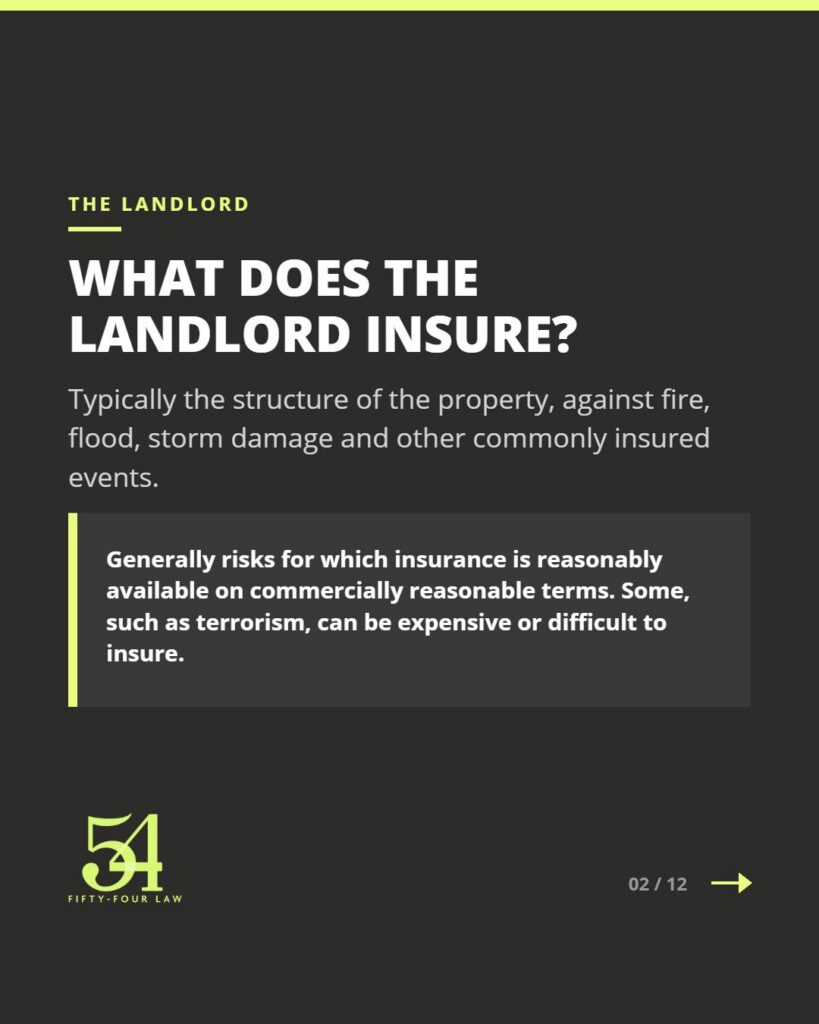
What does the landlord insure?
Typically the structure of the property, against fire, flood, storm damage and other commonly insured events. Generally risks for which insurance is reasonably available on commercially reasonable terms.
Some, such as terrorism, can be expensive or difficult to insure.
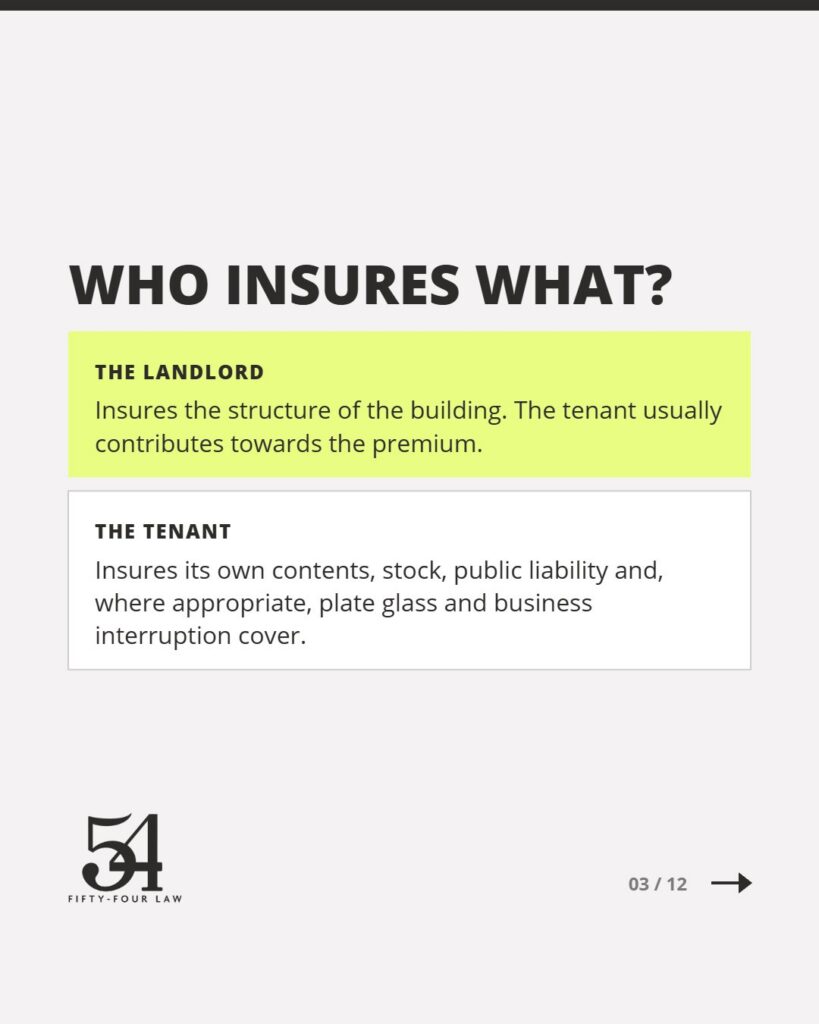
Who insures what?
- The landlord insures the structure of the building. The tenant usually contributes towards the premium.
- The tenant insures its own contents, stock, public liability and, where appropriate, plate glass and business interruption cover.
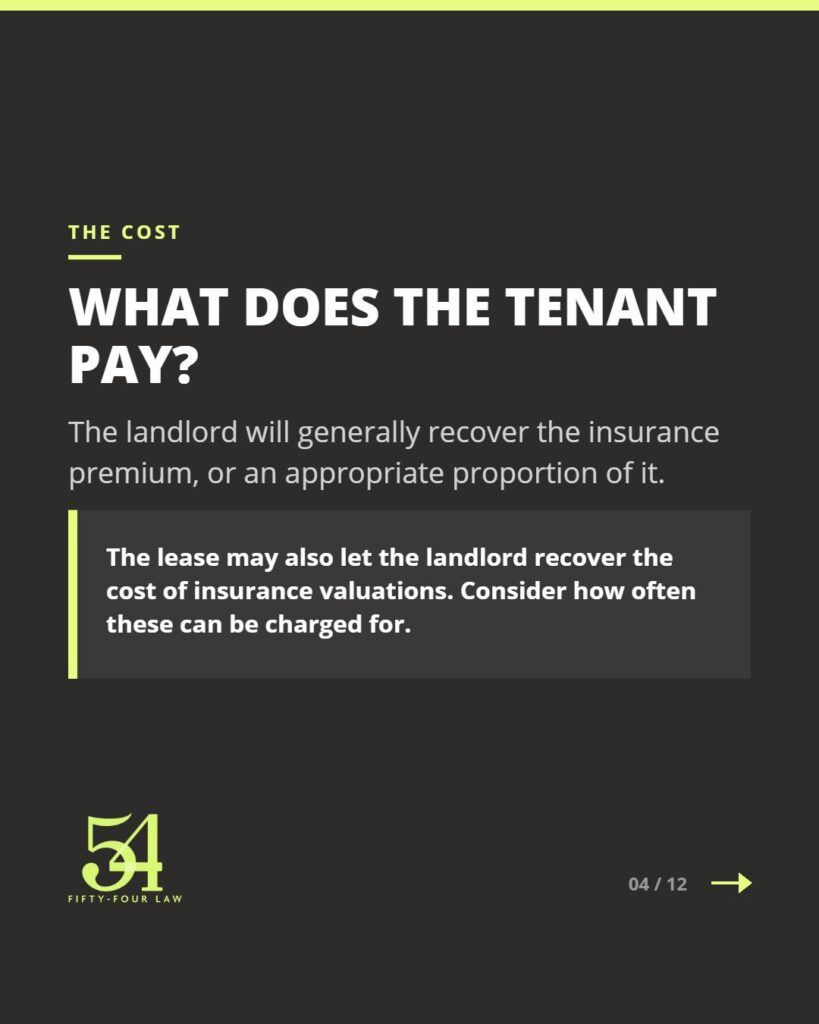
What does the tenant pay?
The landlord will generally recover the insurance premium, or an appropriate proportion of it. The lease may also let the landlord recover the cost of insurance valuations. Consider how often these can be charged for.
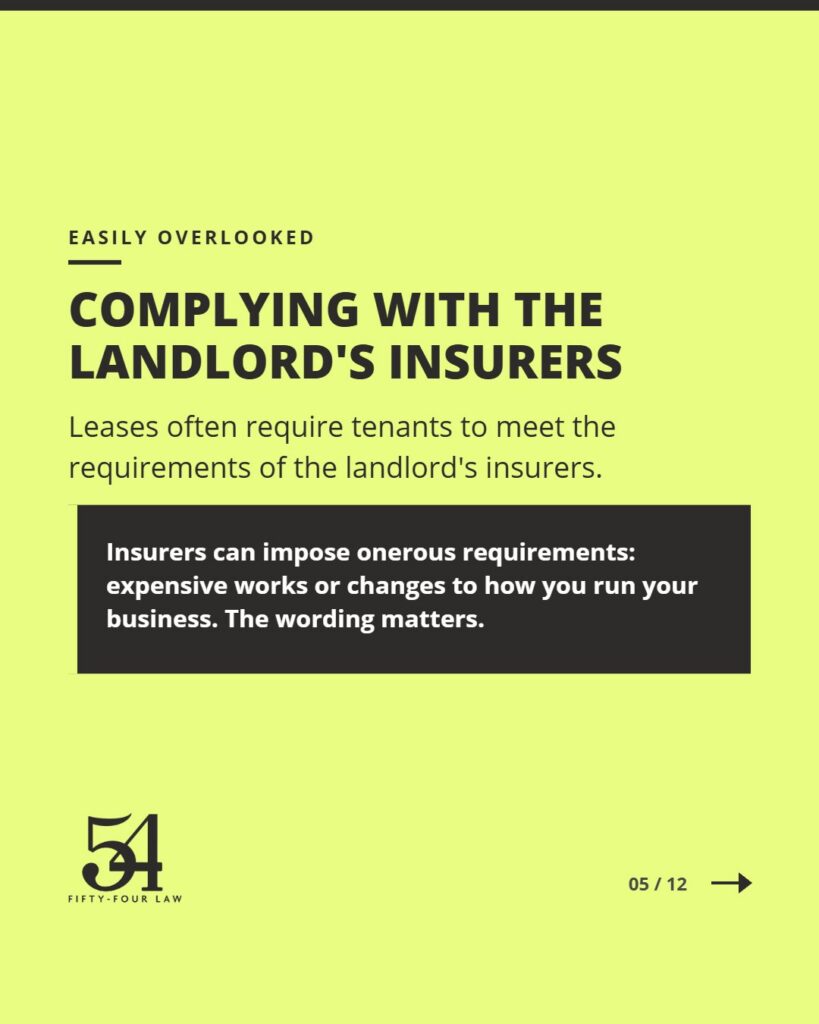
Easily overlooked: complying with the landlord’s insurers
Leases often require tenants to meet the requirements of the landlord’s insurers. Insurers can impose onerous requirements: expensive works or changes to how you run your business. The wording matters.
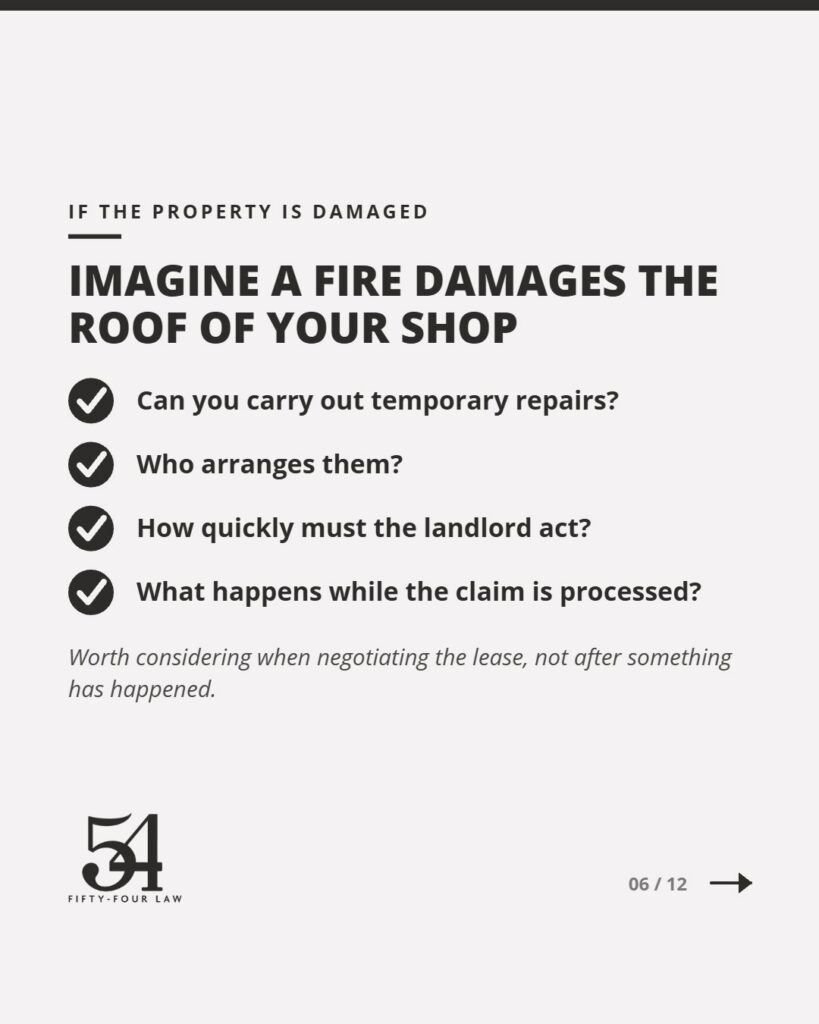
If the property is damaged
Imagine a fire damages the roof of your shop. Can you carry out temporary repairs? Who arranges them? How quickly must the landlord act? What happens while the claim is processed?
Worth considering when negotiating the lease, not after something has happened.
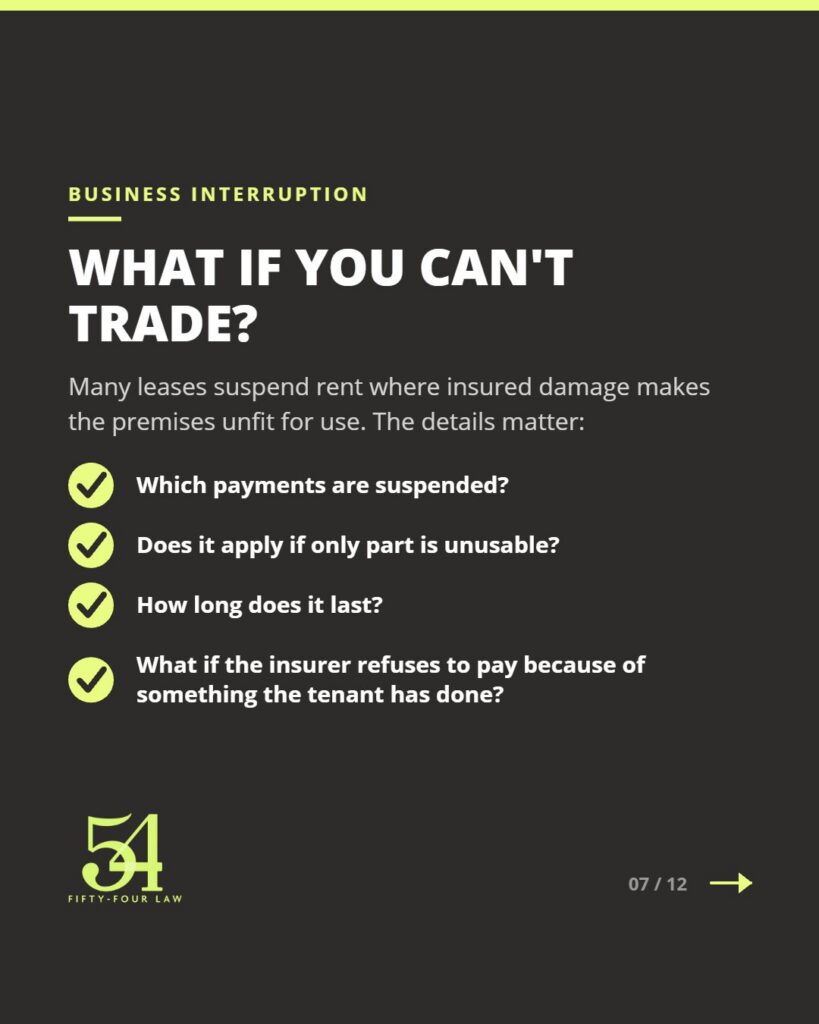
What if you can’t trade?
Many leases suspend rent where insured damage makes the premises unfit for use. The details matter:
- Which payments are suspended?
- Does it apply if only part is unusable?
- How long does it last?
- What if the insurer refuses to pay because of something the tenant has done?
What if rebuilding takes years?
The lease may provide rights to terminate in certain circumstances. The landlord generally retains the insurance proceeds relating to the building.
What if the risk isn’t insured?
Perhaps cover was unavailable or prohibitively expensive. The lease needs to address who bears that risk and what happens to the tenant’s obligations.
A final point on claims: what is subrogation?
In simple terms, it can allow an insurer that has paid a claim to pursue a party responsible for the loss, potentially including the tenant. Some larger tenants seek protection against it. These arrangements are not always straightforward or commercially available.
The bottom line
Insurance isn’t just about who pays the premium. It’s about what happens when something goes wrong, who is responsible, how quickly the property can be repaired and whether the business can continue operating.
Much easier before you sign than after a fire or flood. Have your lease checked with our 24-hour Lease Report, or see our commercial lease solicitor service for tenants.
The carousel
General information only, not legal advice.