
A practical guide for gyms, fitness studios, salons, barbers, beauty businesses and tattoo studios.
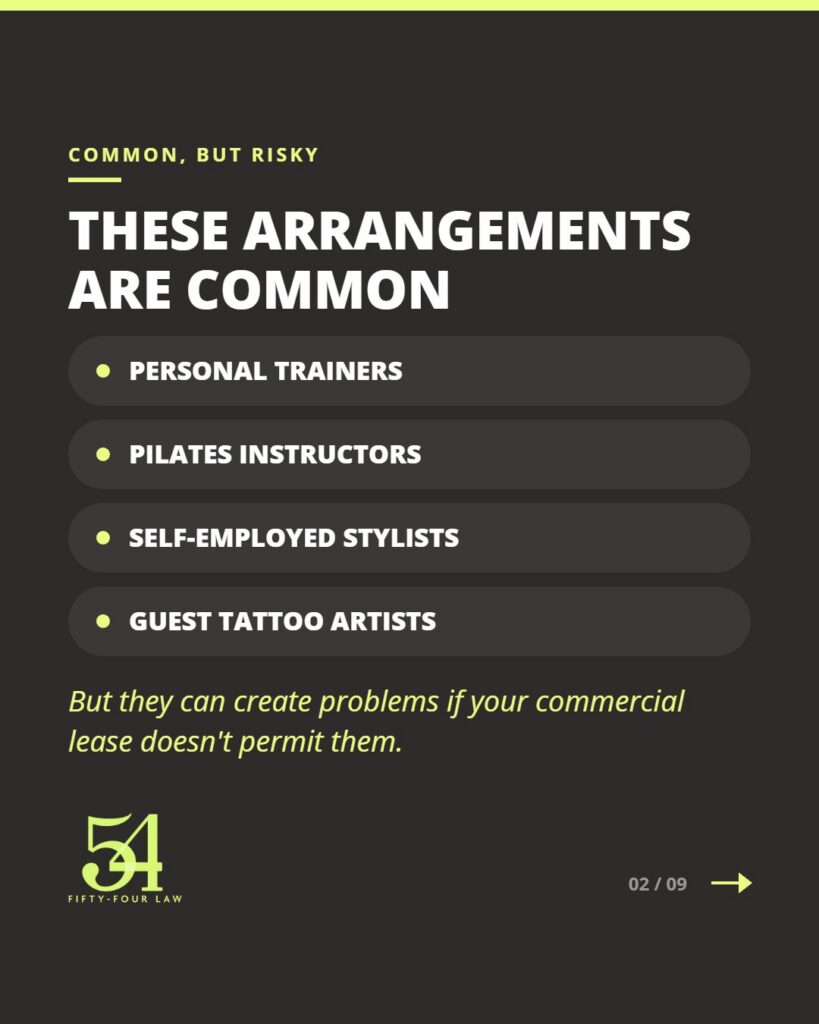
Common, but risky
These arrangements are common: personal trainers, Pilates instructors, self-employed stylists, guest tattoo artists. But they can create problems if your commercial lease doesn’t permit them.
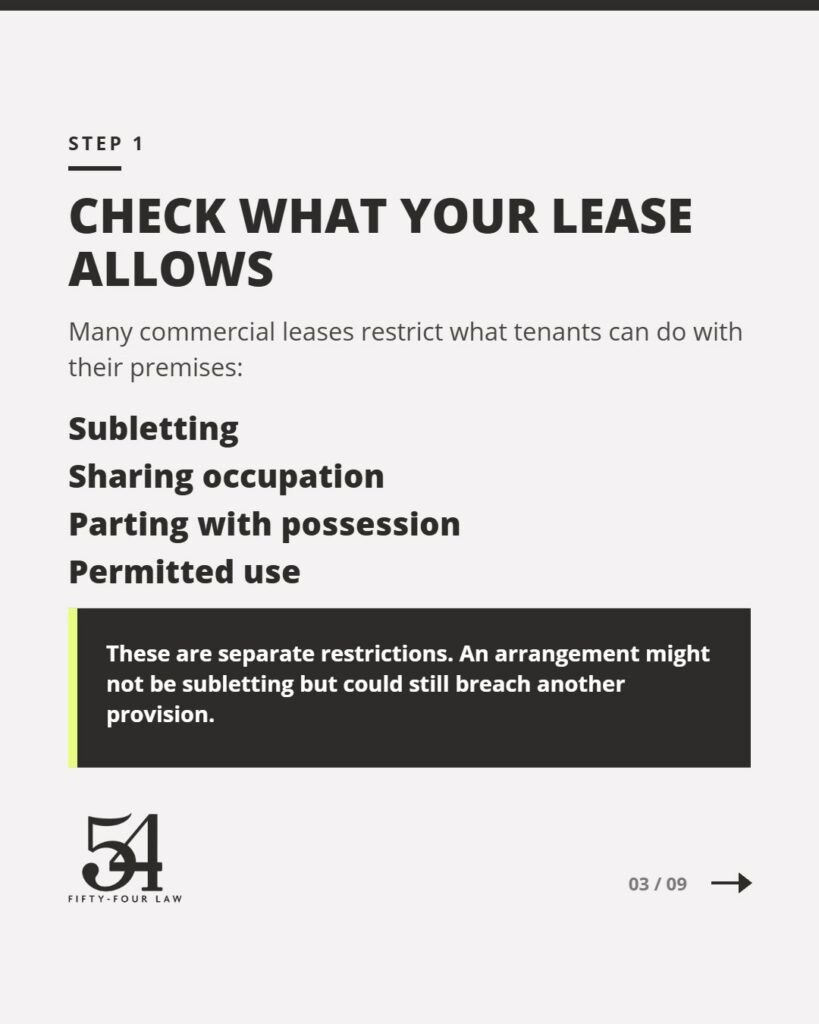
Step 1: check what your lease allows
Many commercial leases restrict what tenants can do with their premises:
- Subletting
- Sharing occupation
- Parting with possession
- Permitted use
These are separate restrictions. An arrangement might not be subletting but could still breach another provision.
The key question
The important question is not simply whether someone else is working from your premises. It’s what rights you’re giving them over the space.
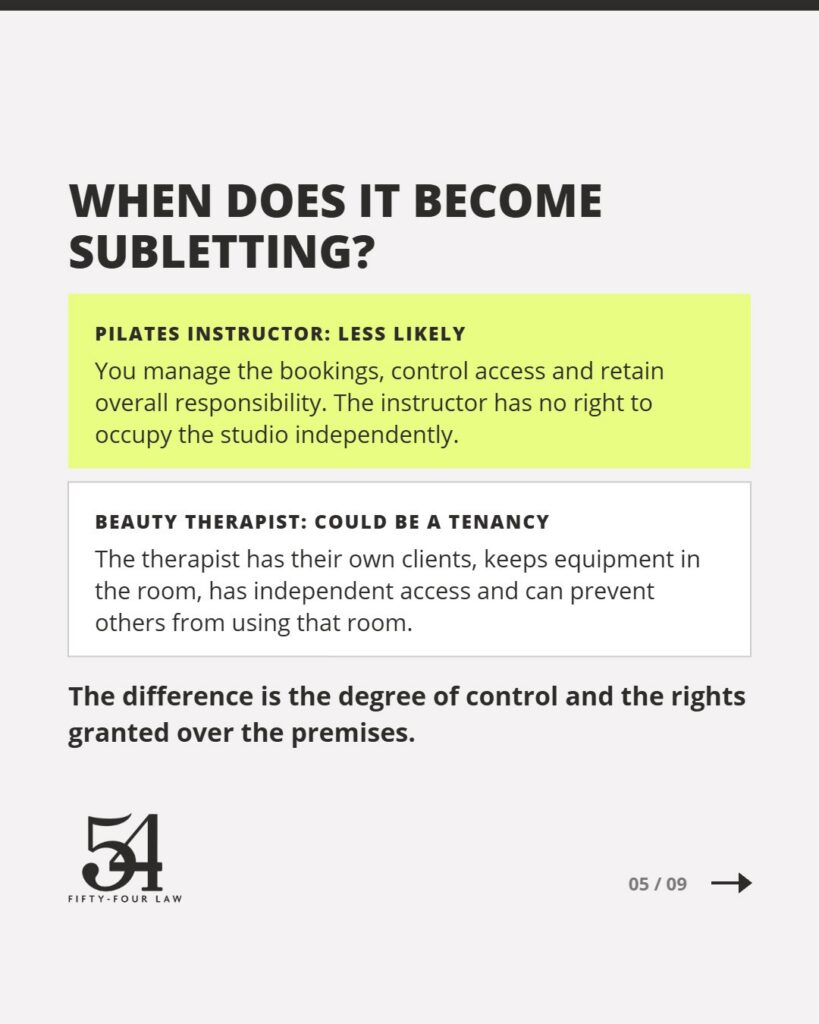
When does it become subletting?
Pilates instructor: less likely. You manage the bookings, control access and retain overall responsibility. The instructor has no right to occupy the studio independently.
Beauty therapist: could be a tenancy. The therapist has their own clients, keeps equipment in the room, has independent access and can prevent others from using that room.
The difference is the degree of control and the rights granted over the premises.
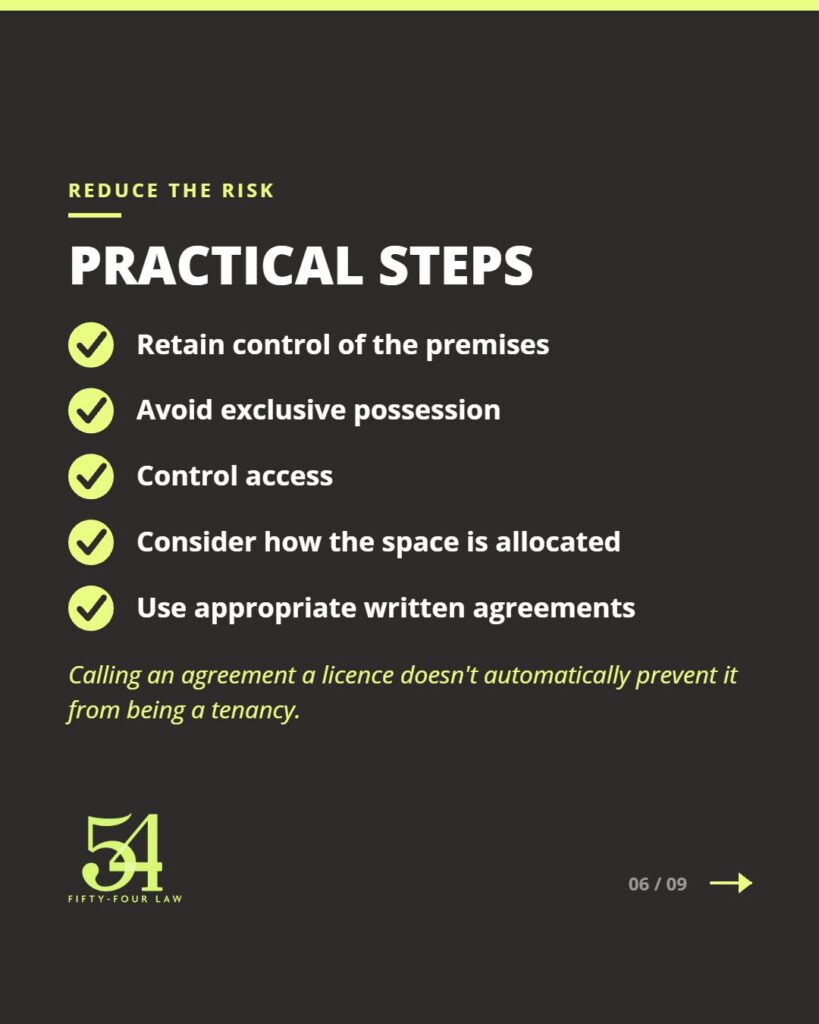
Reduce the risk: practical steps
- Retain control of the premises
- Avoid exclusive possession
- Control access
- Consider how the space is allocated
- Use appropriate written agreements
Calling an agreement a licence doesn’t automatically prevent it from being a tenancy.
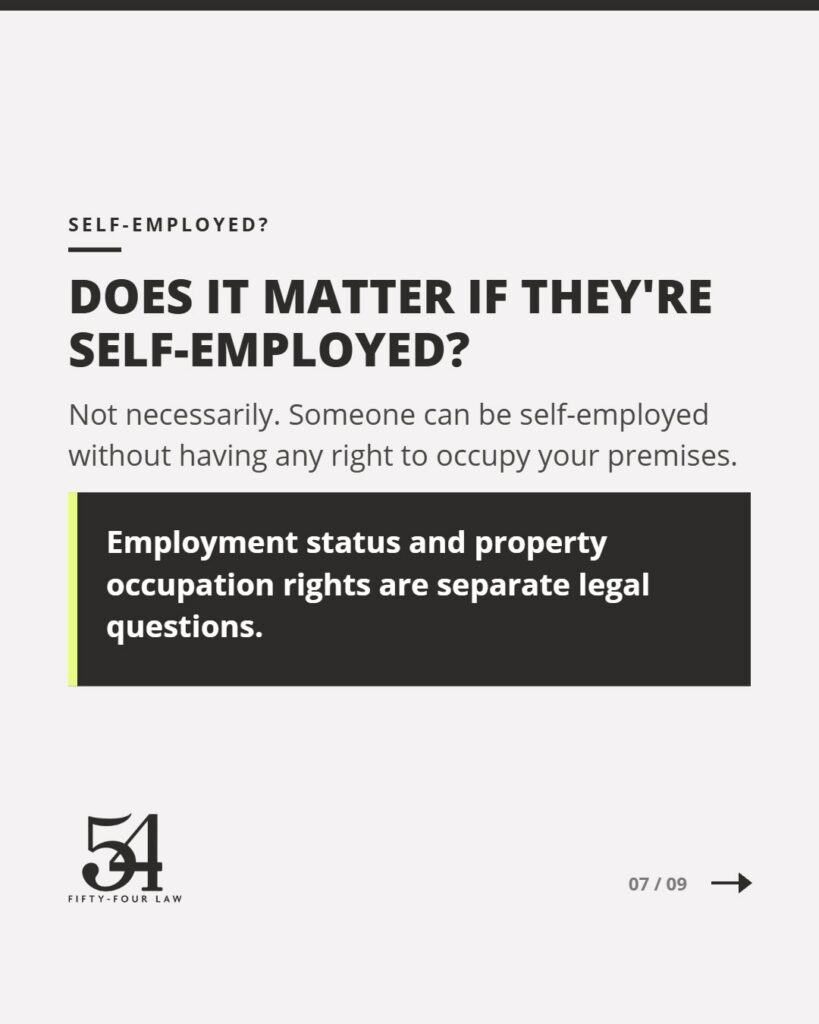
Does it matter if they’re self-employed?
Not necessarily. Someone can be self-employed without having any right to occupy your premises. Employment status and property occupation rights are separate legal questions.
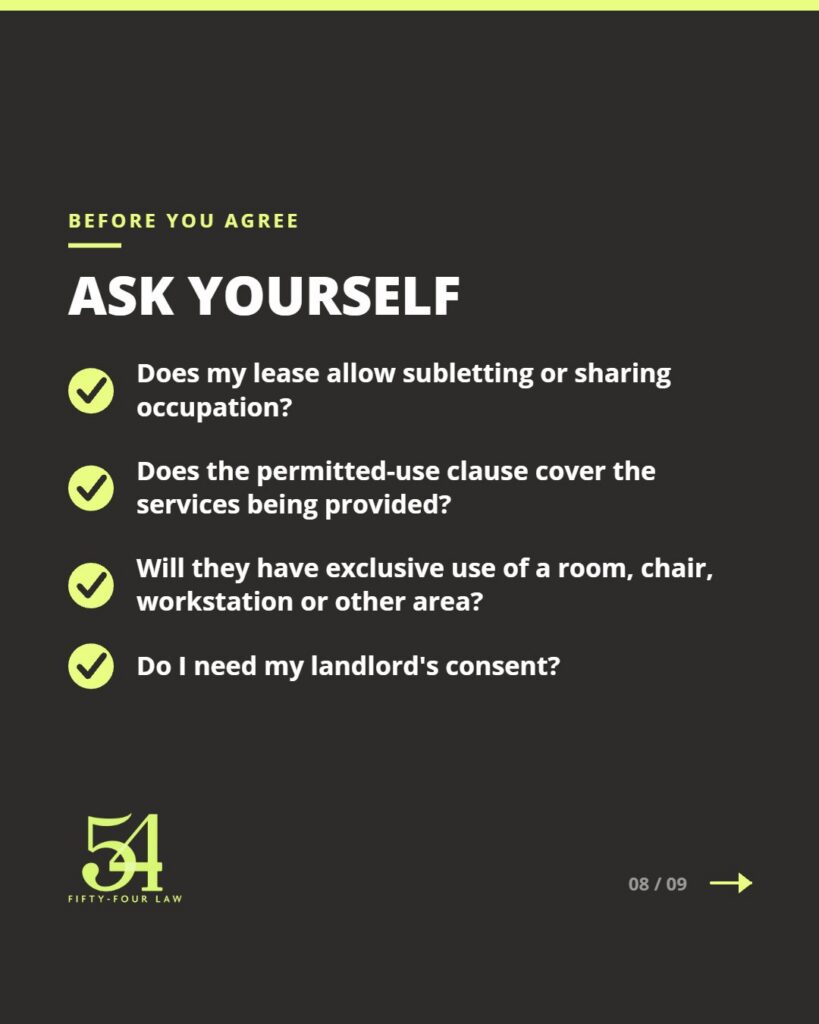
Before you agree, ask yourself
- Does my lease allow subletting or sharing occupation?
- Does the permitted-use clause cover the services being provided?
- Will they have exclusive use of a room, chair, workstation or other area?
- Do I need my landlord’s consent?
It’s not just about who works there
It’s about who controls the space and what rights you’ve given them. Before agreeing to share your premises, check that the proposed arrangement is permitted by your commercial lease.
Read our free guide to allowing other businesses to work from your premises, or see licence to sublet and licence to occupy.
The carousel
General information only, not legal advice.