
Understanding how commercial rents change, what to watch out for and the important changes coming to the law.
If you’re taking on commercial premises, you’ll probably spend a fair amount of time negotiating the rent.
But what about the rent you’ll be paying in three or five years’ time?
That’s where rent reviews come in.
A rent review can have a significant impact on the cost of occupying commercial premises. For tenants, an unexpected increase can put pressure on cash flow and profitability. For landlords, rent reviews provide an opportunity to ensure that the income from their property keeps pace with the market.
And with important changes to the law on the horizon, understanding how rent reviews work is becoming more important than ever.
What is a rent review?
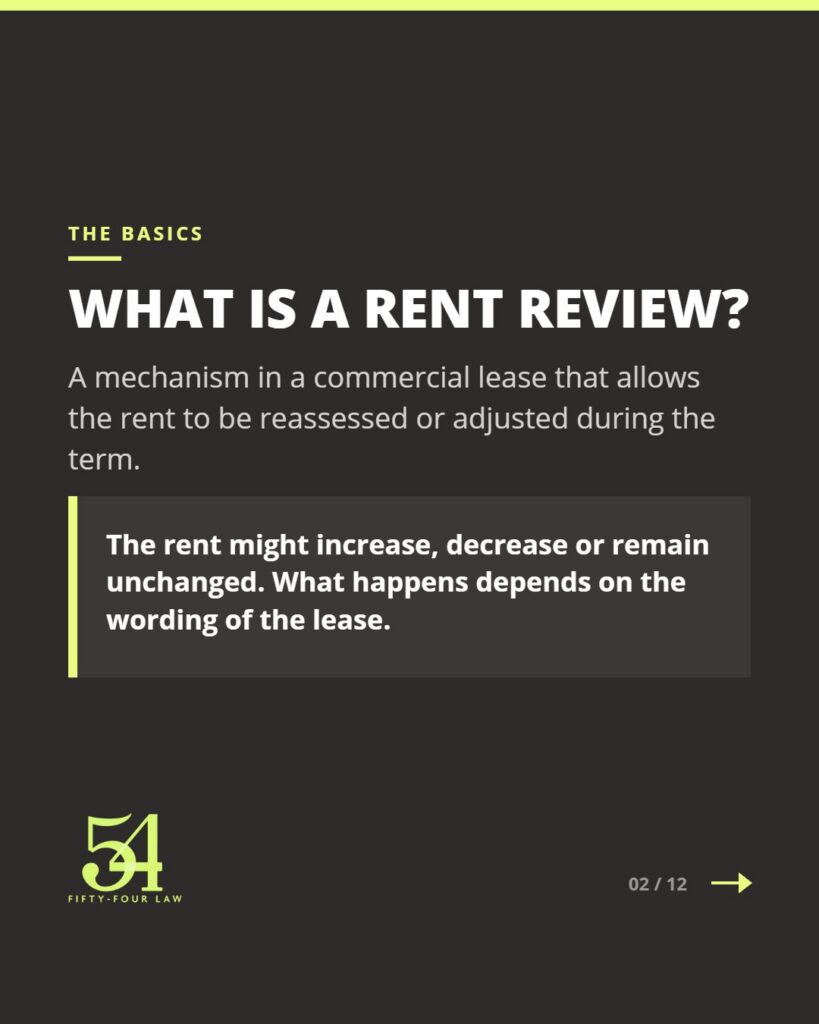
A rent review is a mechanism in a commercial lease that allows the rent to be reassessed or adjusted during the term.
Not every lease contains a rent review. They’re more common in longer leases, often taking place every three or five years.
For example, a business might agree a ten-year lease at an initial rent of £20,000 per year, with a rent review at the end of year five.
What happens at that review depends on the wording of the lease.
The rent might increase, decrease or remain unchanged. Some leases provide for a predetermined increase, while others link the rent to inflation or the rental value of comparable properties.
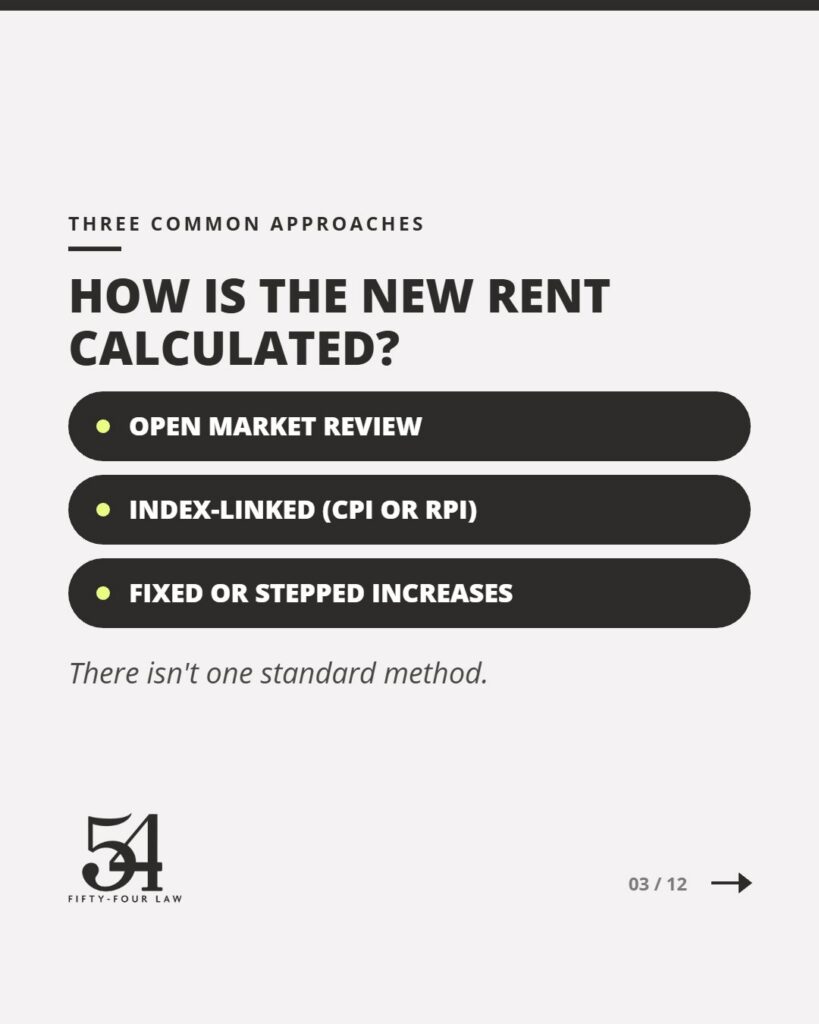
The important thing to understand is that there isn’t one standard method of reviewing commercial rent.
How is the new rent calculated?
There are several common approaches.
1. Open market rent reviews
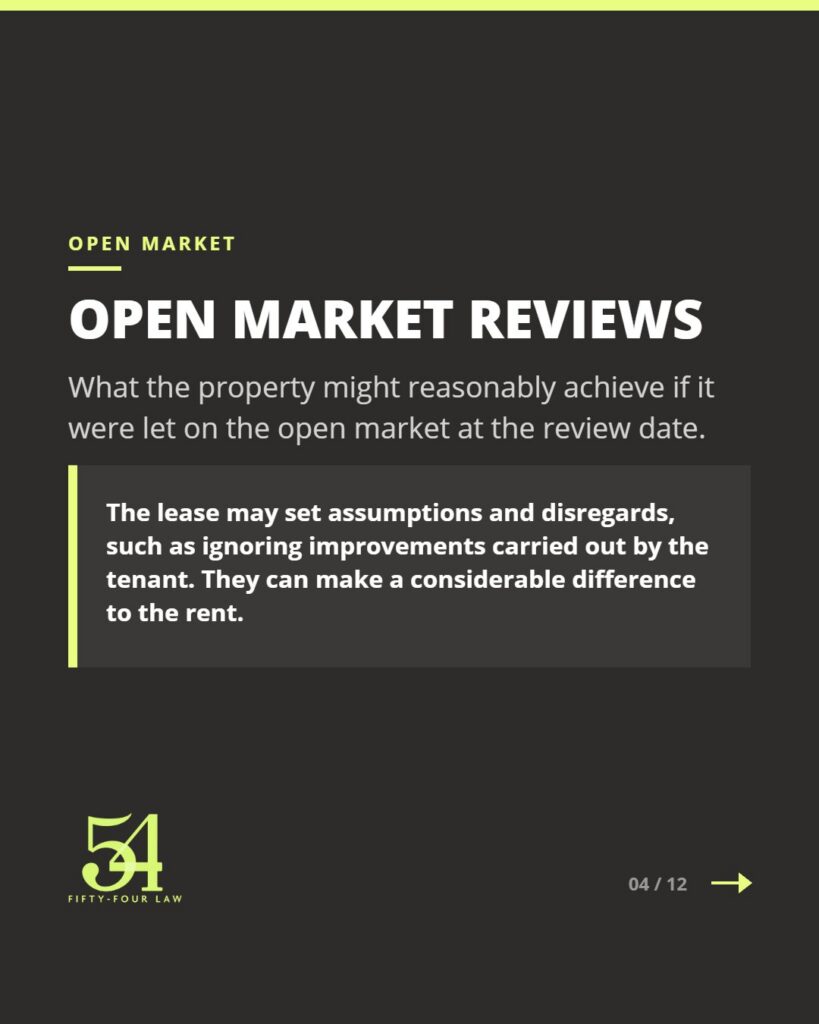
An open market rent review considers what the property might reasonably achieve if it were available to let on the open market at the review date.
This will usually involve looking at comparable properties, their rents and the terms on which they have been let.
However, the exercise isn’t always as straightforward as comparing one shop, office or warehouse with another.
The lease may contain assumptions about the condition of the premises, the permitted use, the length of the hypothetical letting and other matters affecting rental value.
It may also require certain things to be disregarded, such as improvements carried out by the tenant.
These details can make a considerable difference to the rent ultimately agreed.
2. Index-linked rent reviews
Instead of looking at market rents, some leases link rent increases to an inflation index, such as the Consumer Prices Index (CPI) or Retail Prices Index (RPI).
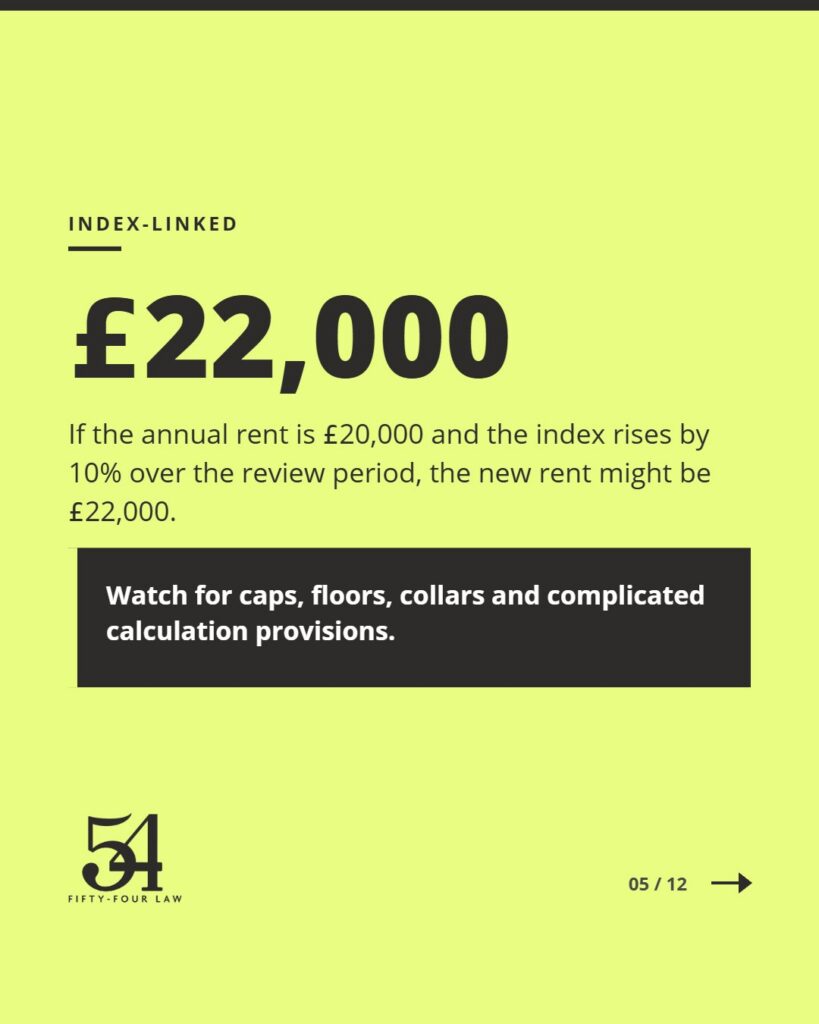
For example, if the annual rent is £20,000 and the relevant index increases by 10% over the review period, the new rent might be £22,000.
The actual calculation will depend on the formula in the lease.
Index-linked reviews can provide a more predictable mechanism than an open market review, but they aren’t necessarily straightforward.
Some leases contain caps limiting increases, floors or collars restricting reductions, or complicated calculation provisions.
Once the ban on upward-only rent reviews comes into force, floors and collars that stop the rent falling will not generally be permitted in new leases caught by it.
And, as we’ve seen during periods of high inflation, even an apparently modest annual increase can become substantial over several years.
3. Fixed or stepped rent increases
Some leases specify the rent payable at different stages of the term from the outset.
For example:
- Years 1–3: £20,000 per year
- Years 4–6: £22,000 per year
- Years 7–10: £24,000 per year
This gives both parties certainty about the rent payable throughout the lease.
However, it also means the agreed increases will generally take effect regardless of what happens to market rents or the wider economy.
What is an upward-only rent review?
Historically, upward-only rent reviews have been a common feature of commercial leases.
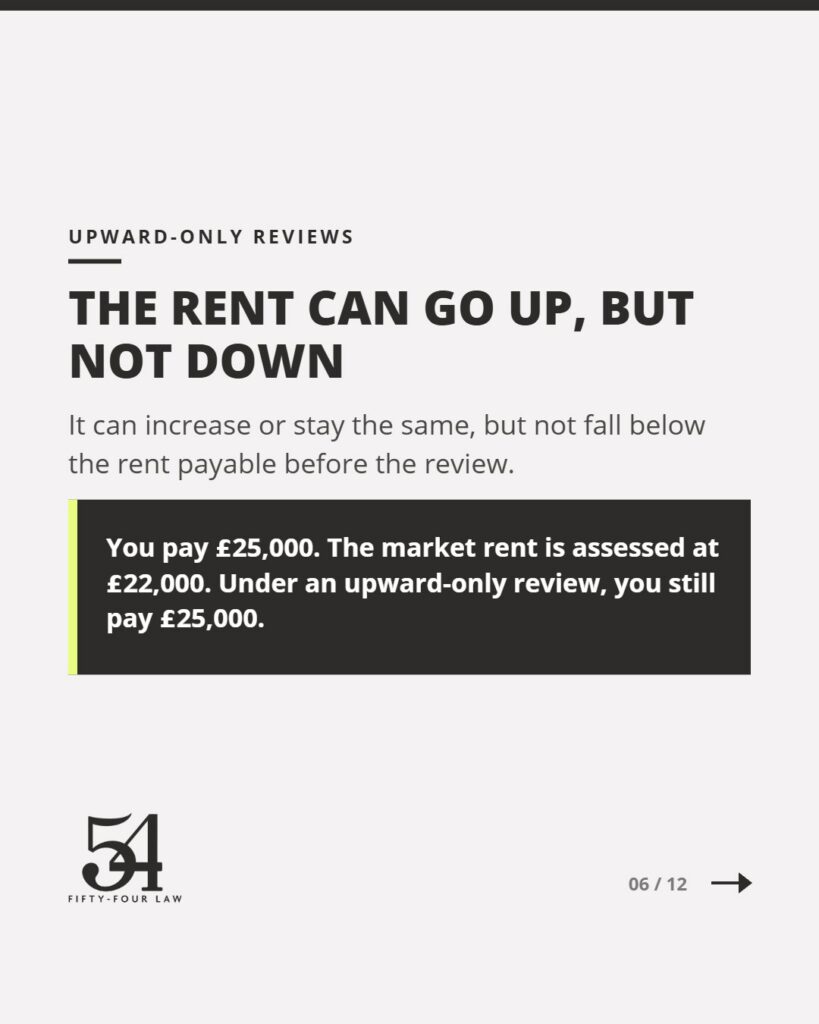
An upward-only review allows the rent to increase or remain unchanged, but not to fall below the rent payable immediately before the review.
For example, suppose you’re paying £25,000 per year for a shop.
At the rent review, the market rental value is assessed at £22,000.
Under an upward-only open market rent review, you would continue paying £25,000 despite the reduction in market rental value.
If the market rental value had increased to £28,000, your rent could increase accordingly.
For landlords, this provides protection against falling rental income.
For tenants, however, it can mean continuing to pay more than the current market rental value of their premises.
And this is where the law is changing.
The big change: upward-only rent reviews are being banned
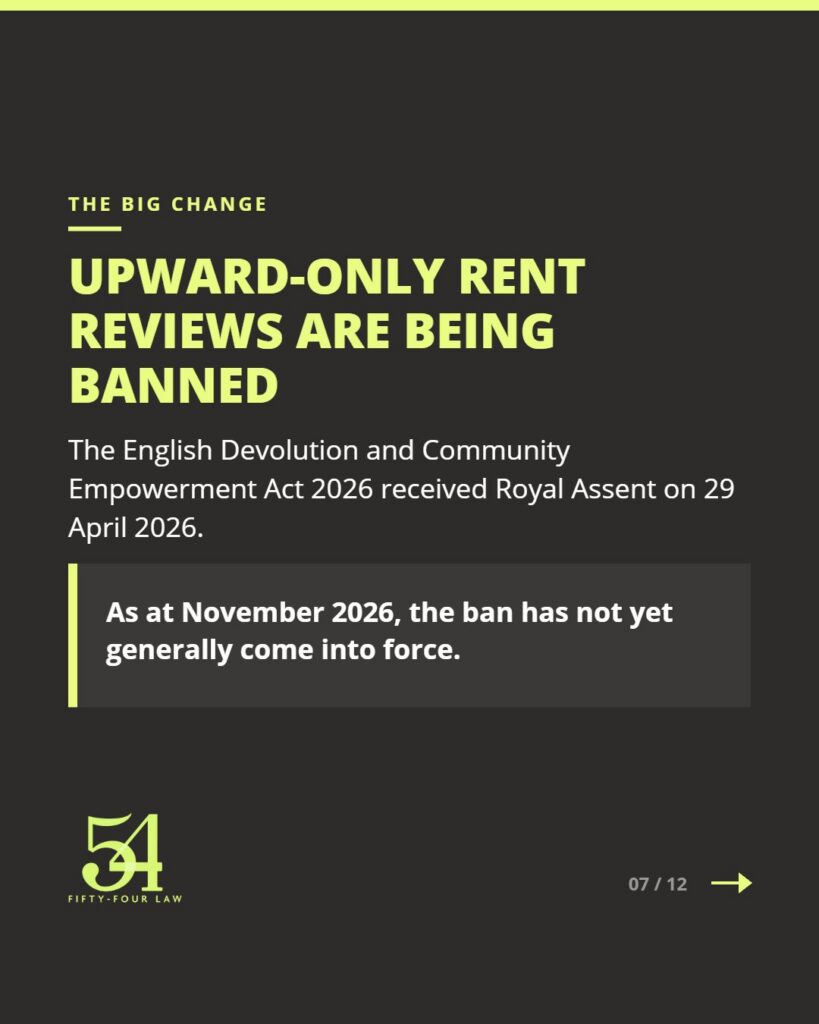
The English Devolution and Community Empowerment Act 2026 received Royal Assent on 29 April 2026.
Among its provisions is a ban on upward-only rent reviews in new and renewal commercial leases in England and Wales.
The legislation is intended to prevent tenants being locked into rents that can only increase, even where the relevant market rent or index has fallen.
However, there is an important distinction between legislation being passed and legislation coming into force.
As at November 2026, the prohibition has not yet generally come into force. Its implementation requires further commencement provisions.
So what does this mean in practice?
Existing leases
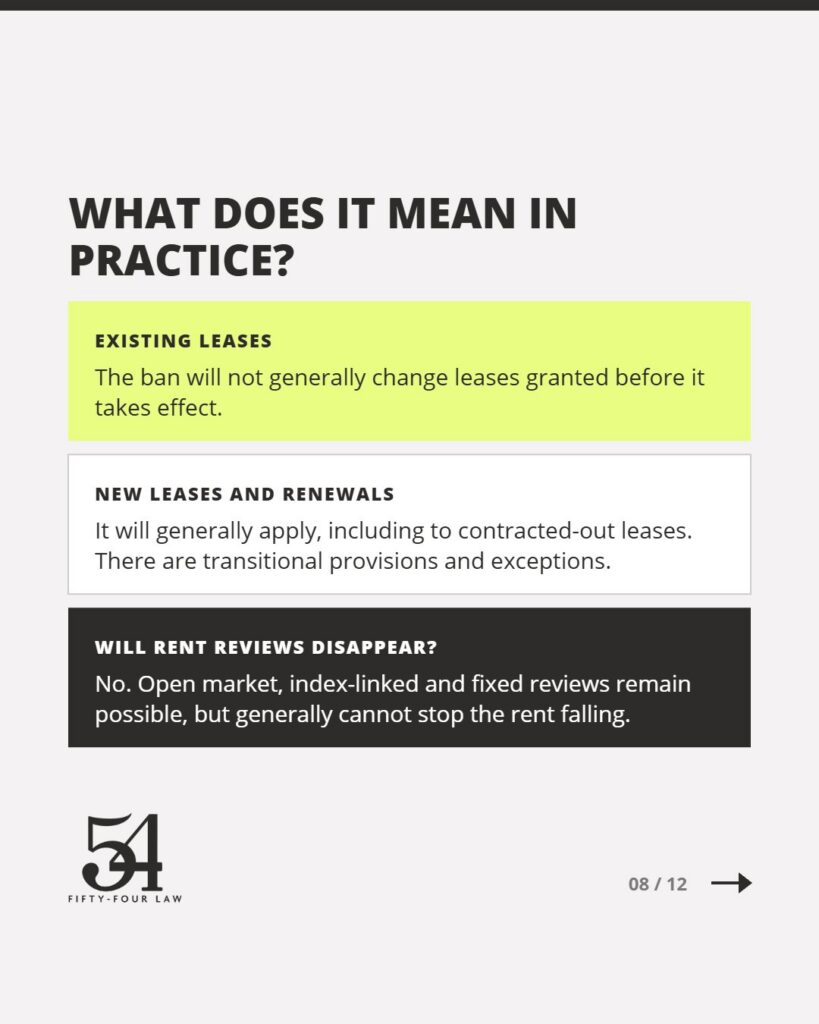
The prohibition will not generally alter rent review provisions in leases already granted before the ban takes effect.
If you have an existing lease containing an upward-only rent review, you should not assume that the provision will automatically disappear.
New leases and renewals
Once the prohibition comes into force, it will generally apply to new commercial leases and lease renewals within the scope of the legislation.
This includes leases that have been contracted out of the security of tenure provisions of the Landlord and Tenant Act 1954.
There are transitional provisions and exceptions, including particular arrangements for renewal leases and options entered into on or after 17 March 2026.
The timing and structure of a transaction will therefore matter.
Will rent reviews disappear?
No.
Landlords and tenants will still be able to agree rent review mechanisms based on open market rental value or inflation indices.
The significant difference is that, where the prohibition applies, those mechanisms will not generally be permitted to prevent the rent from falling.
Fixed or stepped rent increases, agreed at the outset, will also remain possible.
The legislation therefore changes how certain rent reviews can operate. It does not remove the ability to review or agree changes in rent.
How does the rent review process work?
The procedure will depend on the terms of the lease, but an open market rent review will commonly involve the following stages.
1. The review date arrives
The lease will specify when the rent is due to be reviewed.
It’s important to identify these dates well in advance, rather than waiting for the landlord or tenant to raise the issue.
2. The review is initiated
Depending on the lease, one party may serve a notice proposing a new rent or otherwise begin the review procedure.
Not every lease requires a formal notice, and the consequences of failing to serve one can vary.
3. The parties negotiate
The landlord and tenant, often assisted by their respective surveyors, will attempt to agree the new rent.
Where the review is based on market rental value, this may involve considering comparable lettings and the particular assumptions contained in the lease.
4. What if the parties cannot agree?
Many leases provide for the rent to be determined by an independent surveyor acting as an expert or arbitrator.
These are different methods of resolving a dispute, and the lease will usually specify which applies.
The costs of this process can be significant, so it’s worth considering whether a negotiated agreement is possible before referring the matter for determination.
5. The new rent takes effect
Once the revised rent has been agreed or determined, it will generally take effect from the contractual review date.
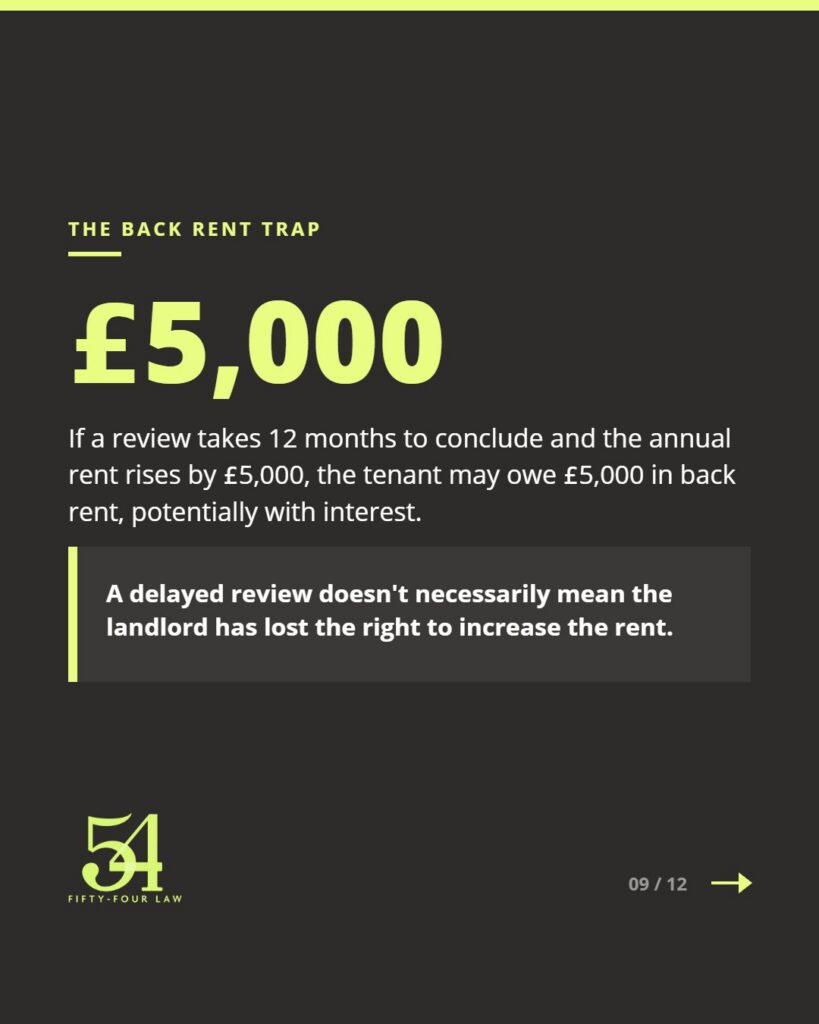
This can create an unexpected financial liability.
For example, if a review takes 12 months to conclude and the annual rent increases by £5,000, the tenant may owe £5,000 in back rent, potentially together with interest.
A delayed rent review doesn’t necessarily mean that the landlord has lost the right to increase the rent.
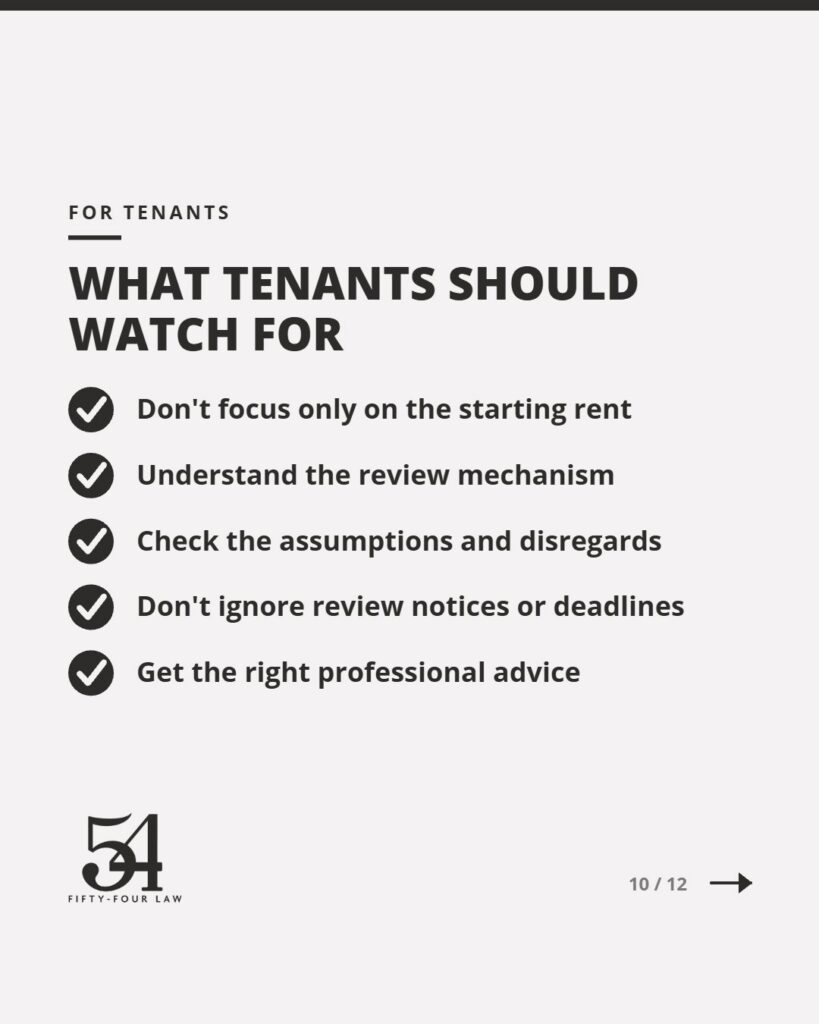
Five things tenants should watch out for
1. Don’t focus only on the starting rent
A lease offering an attractive initial rent might become considerably more expensive after a review.
Consider the potential rent over the entire term, particularly if you’re investing substantial sums in fitting out the premises.
2. Understand the review mechanism
An open market review, an index-linked review and a fixed increase can produce very different results.
Before signing, make sure you understand not just when the rent changes, but how the new figure will be calculated.
3. Check the assumptions and disregards
In an open market review, the valuation assumptions can be just as important as the review mechanism itself.
For example, if you’ve spent £30,000 improving the premises, you probably wouldn’t want to pay additional rent simply because your own investment has made the property more valuable.
Whether those improvements are disregarded will depend on the wording of the lease and the circumstances in which the work was carried out.
This is something worth considering when the lease is being negotiated, rather than leaving it until the review takes place.
4. Don’t ignore review notices or deadlines
Some leases contain strict procedures and deadlines, with potentially significant consequences if they aren’t followed.
Others allow reviews to take place long after the specified date.
If you receive a rent review notice, don’t simply put it to one side.
5. Get the right professional advice
Solicitors and surveyors have different but complementary roles.
Your solicitor can advise on the legal effect of the rent review provisions, the procedures involved and the consequences of the wording.
A commercial property surveyor can advise on rental value, comparable evidence and negotiating the amount payable.
Both can play an important role in protecting your position.
And what should landlords be thinking about?
Rent reviews aren’t just a concern for tenants.
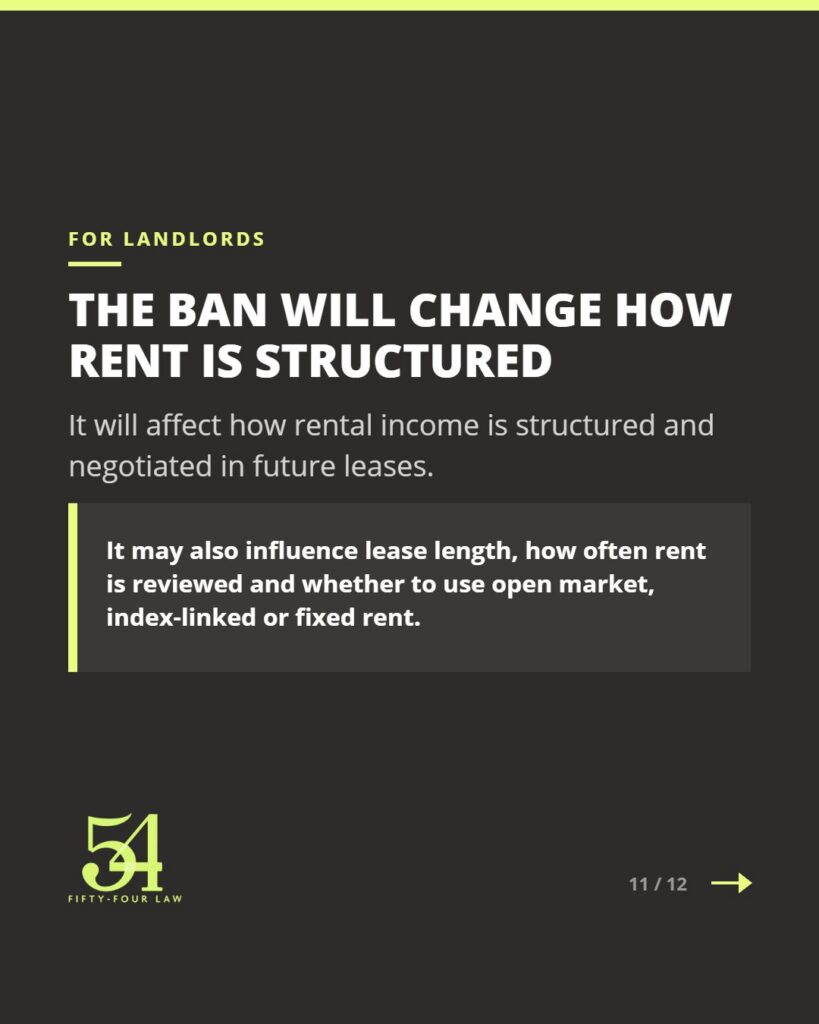
For landlords, the forthcoming prohibition on upward-only rent reviews will affect how rental income is structured and negotiated in future leases.
It may also influence decisions about lease length, the frequency of reviews and whether to use open market, index-linked or fixed rent arrangements.
Landlords should also be mindful of existing lease provisions when granting underleases or negotiating renewals, particularly where the new legislation may apply.
The key is to understand the commercial consequences of the proposed arrangements before committing to them.
Final thoughts
Rent reviews can have a considerable impact on the long-term cost of commercial premises.
And while the forthcoming changes to upward-only rent reviews are significant, they don’t remove the need to understand and negotiate the rent review provisions in a lease.
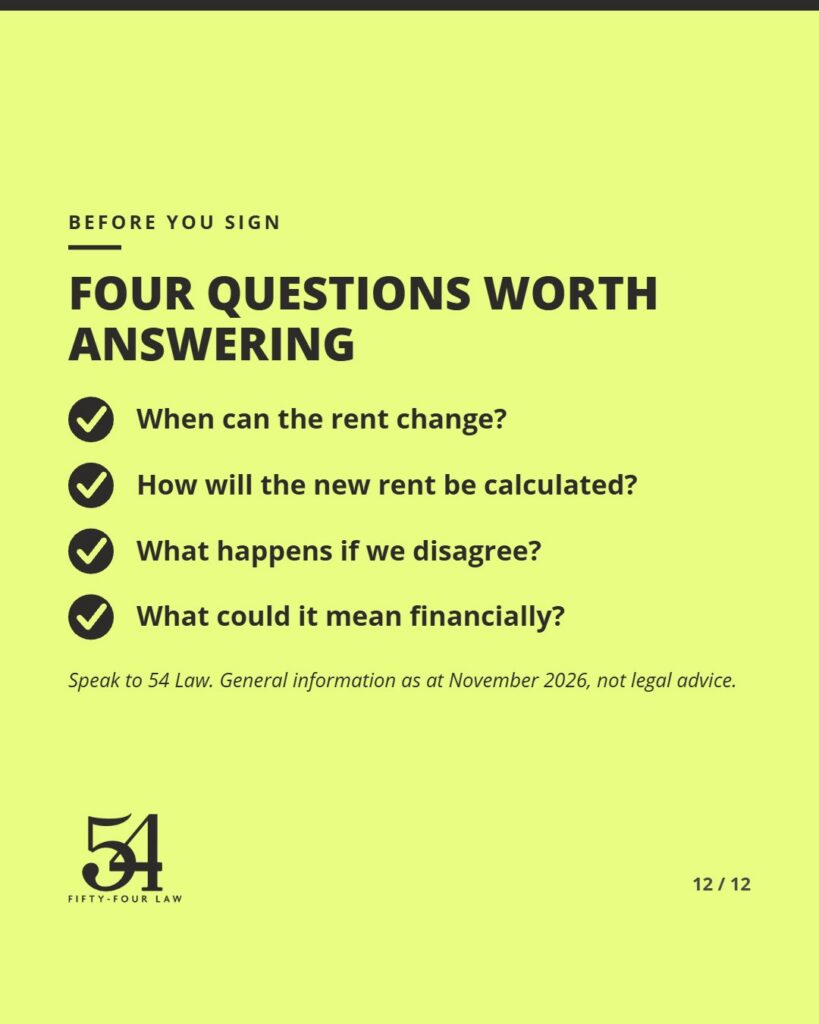
Whether you’re a landlord or tenant, the questions remain much the same:
When can the rent change? How will the new rent be calculated? What happens if we disagree? And what could it mean financially?
Those are questions worth answering before you sign the lease, rather than discovering the answers several years later.
Free guide: User Guide to Commercial Leases →
A practical guide to understanding and using your commercial lease, from rent and service charge to repairs, alterations and leaving.
Speak to 54 Law about your rent review, have a new lease checked with our 24-hour Lease Report, or see how we help landlords.
The carousel
General information as at November 2026, not legal advice.